
Review: 'Beast of Borikén’ Is a Haunting Debut Where the Real Horror Is Colonialism
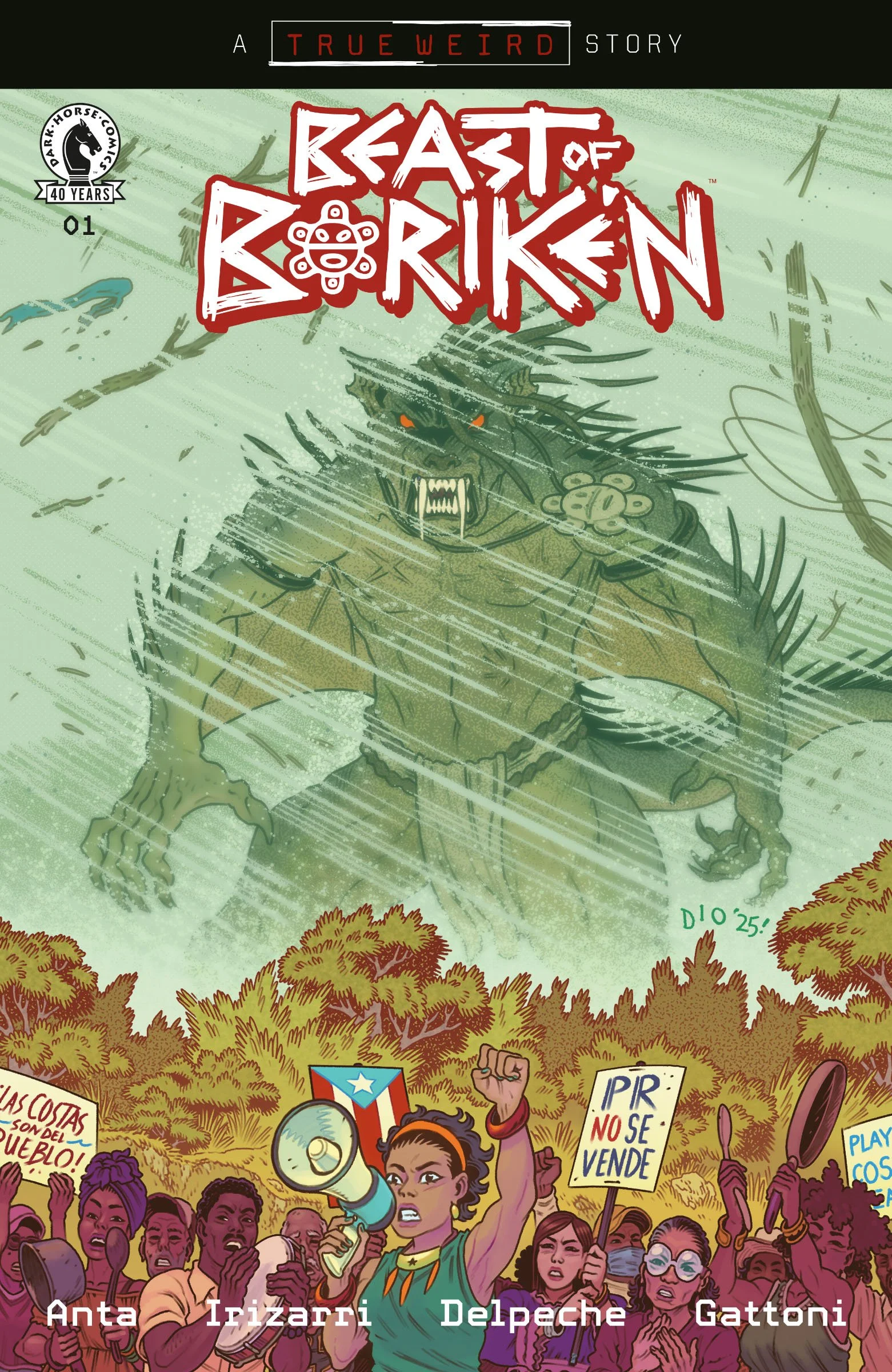
BEAST OF BORIKÉN #1
Release Date: July 1, 2026
Creative Team
Writer/Cocreator: Julio Anta
Artist/Cocreator: Daniel Irizarri
Colorist: Patricio Delpeche
Letterer: Lucas Gattoni
Publisher: Dark Horse Comics / Tiny Onion
TL;DR
Beast of Borikén #1 is a debut that sneaks up on you. It wrapped up in a monster comic, and el Chupacabra is definitely there, but what stuck with me is everything else around it. Julio Anta and Daniel Irizarri have built an unabashedly Puerto Rican story that is angry, tender, and deeply human, using the creature lurking at the edges to feel less like a gimmick and more like a promise.
Full Review
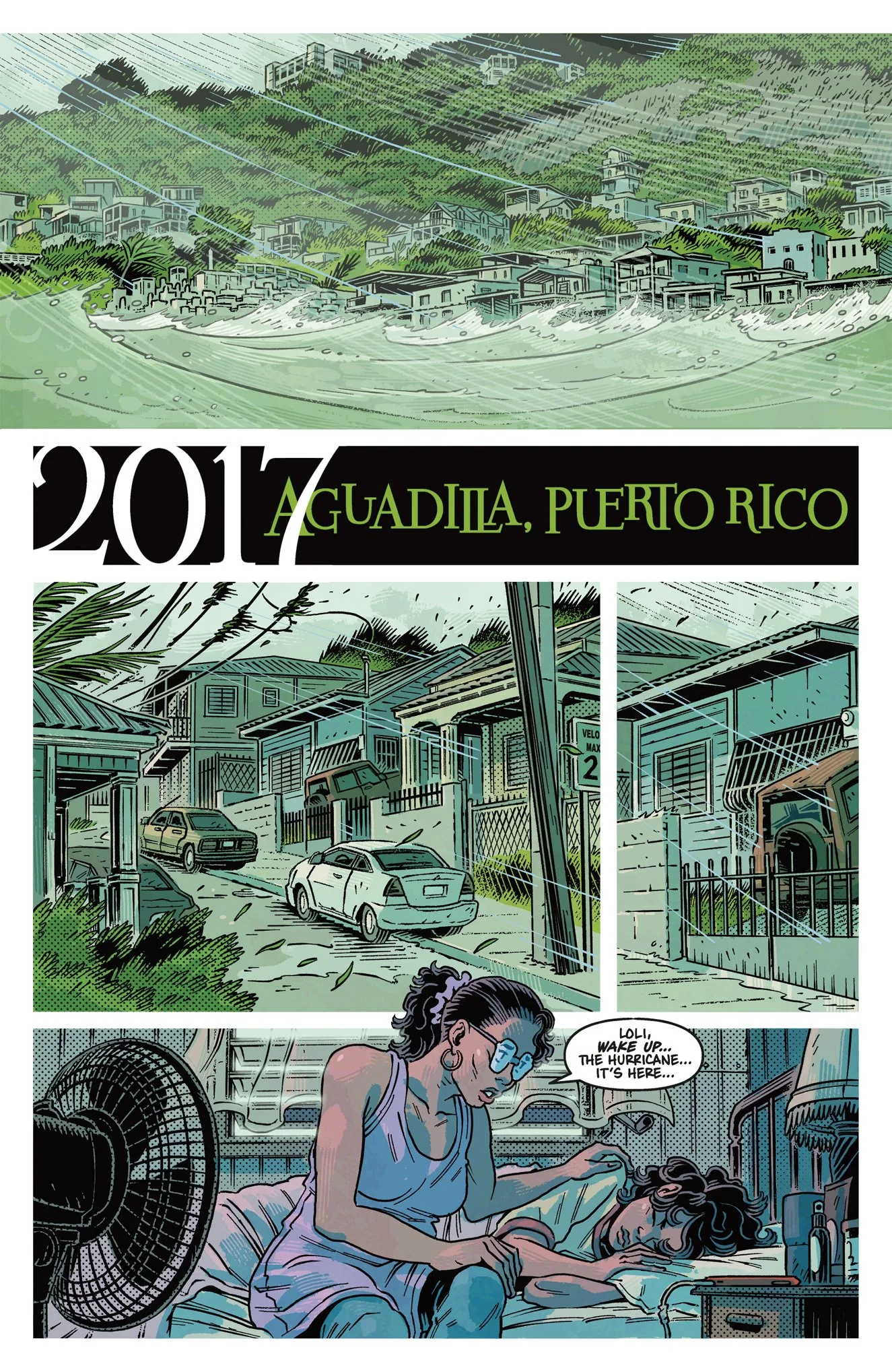
Beast of Borikén is a "True Weird" story from Julio Anta and Daniel Irizarri, who cocreated the book, with colors by Patricio Delpeche and letters by Lucas Gattoni from Dark Horse Comics and Tiny Onion. The issue moves between two timelines. In 2017, we meet Loli, a young girl riding out Hurricane Maria at home with her mother while her father is at the hospital during the storm. Eight years later, Loli has grown up to become a leading activist fighting the Alma Resort, a beachfront development led by (white) American transplant Simon Hunt (who strangely looks like a version of Ryan Seacrest) that threatens to displace the people of Aguadilla and disrupt the already fragile local economy. As the groundbreaking ceremony arrives, set on the eighth anniversary of Maria, the bulldozers disturb something in the forest that has been there a very long time. The issue saves its biggest emotional blow for the final pages, returning to 2017 to show exactly how much Loli lost due to the storm.
What impressed me most about this issue is how patient it is. Anta isn't in a rush to show you the infamous monster. He's far more interested in the people, in their slow accumulation of grief and frustration and resilience that makes the eventual horror mean something even more. A radio debate between Loli and Hunt is the foundation of the present-day timeline, and it lays bare the comic’s ultimate evil: the colonialism that has ravaged the island for a long time. It would have been easy to make Hunt a full-on cartoon villain. Instead he's more insidious, a smiling developer armed with selective statistics, the language of generosity, and greasy palms that get him access to whatever he wants. The script carries a clear point of view about colonialism, gentrification, and who gets to call Puerto Rico home, and it never softens that anger for comfort.
For a story that uses Hurricane Maria as a backdrop, it’s worth reflecting on how much real history is packed underneath the fiction here. Loli's father doesn't die because the storm was simply too strong. He dies because the hospital generators fail, and that detail is pulled straight from the history books. Puerto Rico's electrical grid had been decaying for over a century before Maria ever made landfall, the product of a long colonial arrangement that left the island politically unable to maintain the infrastructure it had once been celebrated for.
As the Urban Institute detailed shortly after the storm, Puerto Ricans felt this deterioration before the hurricane, with increasingly common blackouts, decaying roads, undrinkable water, and growing inequality. The island's residents cannot vote in US elections and have no voting representatives in Congress, yet decisions made on the mainland directly shaped the disinvestment that left the grid so fragile. Maria didn't just expose bad luck. In the same way that Katrina laid bare the inequality in New Orleans, Maria exposed an infrastructural collapse rooted in Puerto Rico's specific political and economic situation. Knowing that, the resort plot stops feeling like a separate storyline and starts feeling like the same wound reopening. The same forces that let the lights go out in 2017 are the ones bulldozing the forest eight years later, and Anta trusts you to make that connection yourself.
Daniel Irizarri's linework brings this to life with detailed and lived-in art, packing the protest scenes and a bomba drumming sequence with so much background depth that the community feels real before you're ever asked to fear for it. He's equally strong on the quiet moments, like the cramped bathroom where Loli and her mother shelter from the storm, and the loud stuff, like the sudden red-soaked panel where the beast finally strikes. The page that stood out most for me is the double-page spread of Aguadilla drowning under floodwater, a single image that says more about the scale of the disaster than any caption could.
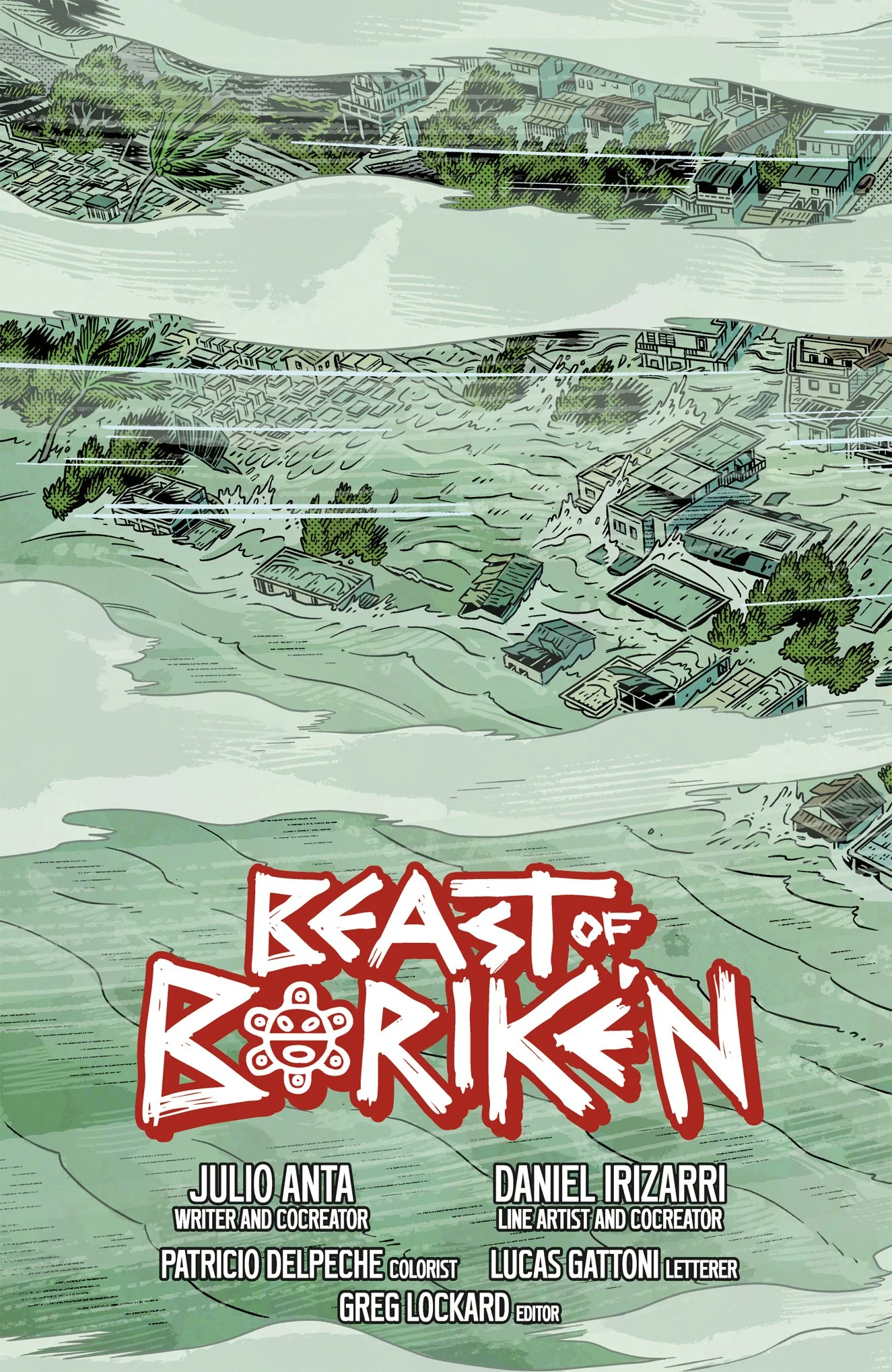
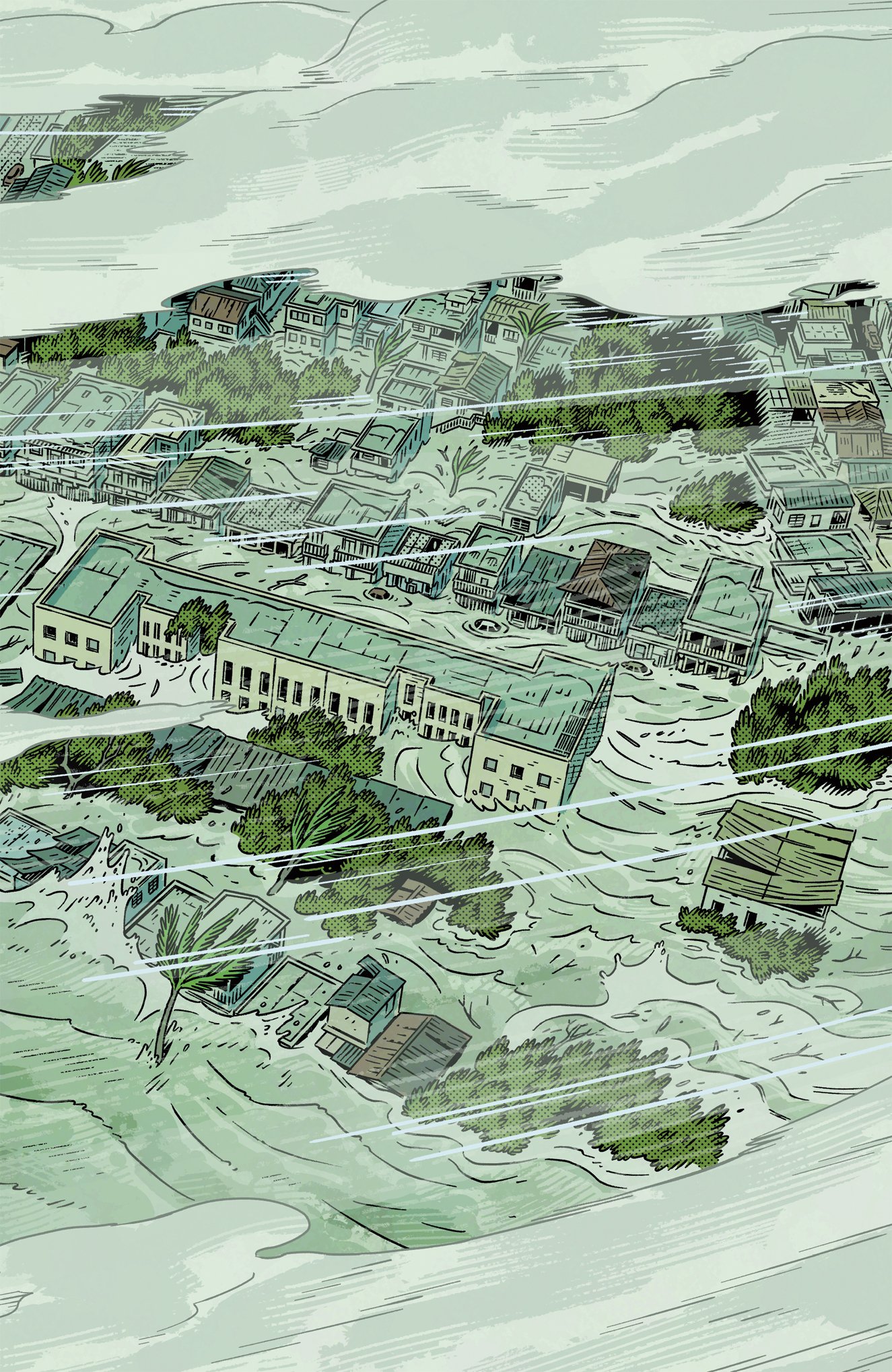
Colors from Patricio Delpeche also deserve a spotlight. The book leans on color to separate its timelines and moods, washing the hurricane sequences in sickly greens and blues, then shifting to warm, sun-soaked tones for the present-day scenes before that warmth curdles into something darker by the end. The final page, with Loli's anguished face reflected in the eye of the beast, is a stunning use of color to fuse grief and horror into a single image. Lucas Gattoni's lettering rounds it out, especially in the storm sequences, where the oversized sound effects give the hurricane a physical, overwhelming presence on the page.
I came to Beast of Borikén expecting a creature feature and left thinking about a people, an island, and a wound that hasn't healed. That the monster works at all is because Anta and Irizarri did the hard work first, making me care about the people who are about to be caught in its path. I'll be back for issue #2 without hesitation.
Rating: 4/5