

‘Toy Story’ 5 Isn't Just Classic Pixar, It's Classic Cinema
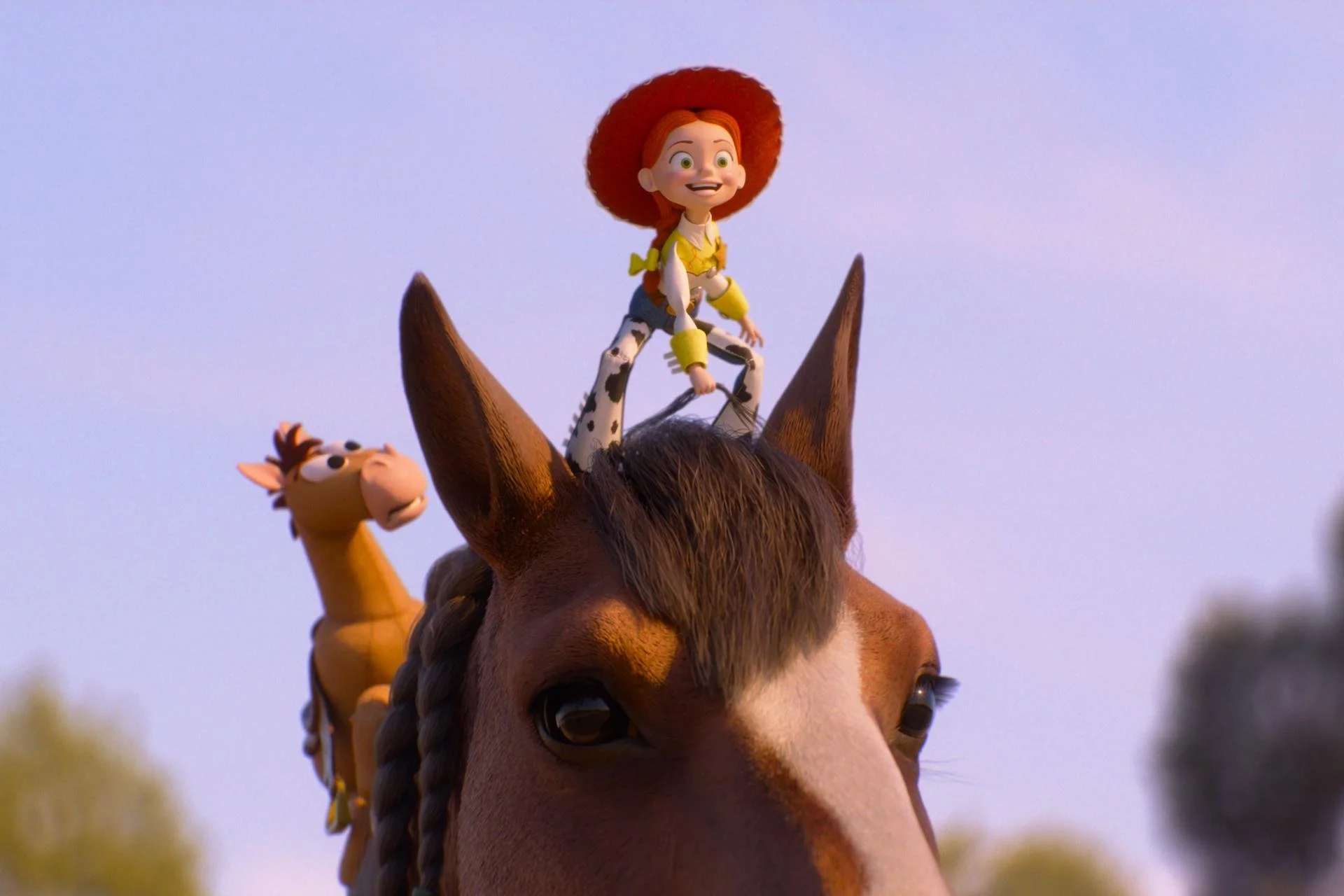
With Toy Story 5, Pixar makes the smart move of handing the franchise’s reins to Jessie, while Woody and Buzz provide supporting duties. The film wastes no time establishing Jessie as the emotional rock fans of all ages can cling to.
Underneath the standard toy-rescue plot is a theme that feels uncomfortably tuned to our world today: the idea of playtime itself is disappearing. Bonnie has grown out of her toddler years, yet still plays with Jessie, Bullseye, and the rest of the toys she came into possession of in previous films, but she can't seem to make friends with kids her own age at school or in her neighborhood because they don’t play with toys anymore. Their entire attention span is now dedicated to screen-time. One discarded old toy puts it bluntly, groaning that "the age of toys is over," and the movie treats that line less like a punchline than a eulogy.
When Bonnie's parents see her struggling to make friends, they cave and buy her a Lilypad, a kid's tablet in the shape of a green frog and entirely connected to her peer group. Within minutes of turning on, Lilypad has arranged a playdate and quickly absorbs Bonnie into her glowing light. But the film understands something many of us have let ourselves forget: a friend you find through a screen isn't the same as a friend you sit on the floor and build an entire world with. That latter kind, the imaginative kind, is what the movie is really alluding to. During a sleepover set up by Lilypad, her new "friends" mock her for still loving her toys, and it's the fallout from that rejection that lands Jessie and Bullseye back at the old farmhouse where Emily once lived, now home to a nine-year-old named Blaze. Blaze still plays. She still imagines. She's similar to Bonnie in many ways, and the film knows that two kids like that finding each other is no small feat.
Bonnie’s rejection unearths the same feelings of abandonment and failure within Jessie from way back when Emily, her original owner, donated her after growing up. This is when the emotions really started to bubble for me. One of the scenes that opened the tear ducts is when Jessie finds a lunch box buried beneath the tire swing where she and Emily used to spend endless hours playing. For years, Jessie carried the belief that she was just a toy somebody outgrew and gave away. Those are the emotions that lead to the version of Jessie from all the way back when she was introduced in Toy Story 2. Yet this box is full of trinkets and keepsakes she finds initiates an awakening that begins to heal decades of trauma. She discovers that she mattered so much to Emily that Emily named her own daughter after her. It subverts everything Jessie thought she knew about her own past and it’s presented with a gut punch of raw emotions.
The film’s humor never lets the emotion turn too heavy for too long, though. The original toy cast doesn't get a ton of time, but every second they're on screen they're firing off quick one-liners that are a splendid throwback to the first film. And then there's Smarty Pants, the new electronic potty-training toy who keeps the comedy elevated even when the jokes are, fittingly, poop jokes. There are also plenty of vintage Pixar sight gags and easter eggs that eagle eye fans will spot with a smile.
I’d be remiss to not talk about the animation of a Pixar movie. The film opens on a deserted island where a fleet of new generation of Hi-Tech Buzz Lightyear toys wakes up, and the animation is gorgeous. It’s vivid and alive in a way that makes you question if this is actually animation or real life. From there the movie keeps reinventing how it looks depending on whose world we're in. When Bonnie or Blaze play, their imaginations spill across the screen in a coloring-book style that feels like an child’s drawing come to life. These scenes aren’t just included for the sake of visual differentiation. They're also the film showing you what it looks like when a kid takes the whole universe living in their head and brings it to life. On the opposite end of the spectrum, Jessie's scenes are softer and more ethereal to match the tenderness of those moments. The whole film understands the relationship between how something looks and how it can make you feel.
I’ve always seen Andy as a representation of my own journey through stages of life. A kid growing alongside his toys who has to eventually figure out what becoming an adult means. But I’m 38 now and taking my 5-year-old niece to see this fifth entry of a film franchise that has meant so much to me hit me in a way I didn't expect and made me appreciate these characters, their stories, and their relationships all the more. Sitting next to my niece in that theater, I realized that if I was Andy, she's now Bonnie. An imaginative free-spirit who finds unbridled joy in the things she creates with her toys and who hasn't yet learned that one day she’ll be expected to put all of it away. Watching her watch this movie with Woody and Jessie figures on her lap created our own special kind of toy story.
And that’s the magic of what Pixar still does better than any other studio. This franchise isn’t just movies about toys. They're movies about the people who love them and how easily we can let that love slip through your fingers if we don’t hold on to. Whether you're the one being forced to grow up or the one watching someone you love go through it, Toy Story 5 captures them brilliantly.
As technology like AI continues its assault on the human component, the world needs more Bonnies and Blazes.
Rating: 5/5 stars